AI Overviews y AI Mode: requisitos de Google para sitios web en 2026
Actualizado: 14. septiembre 2026 · 8 entradas
De qué se trata
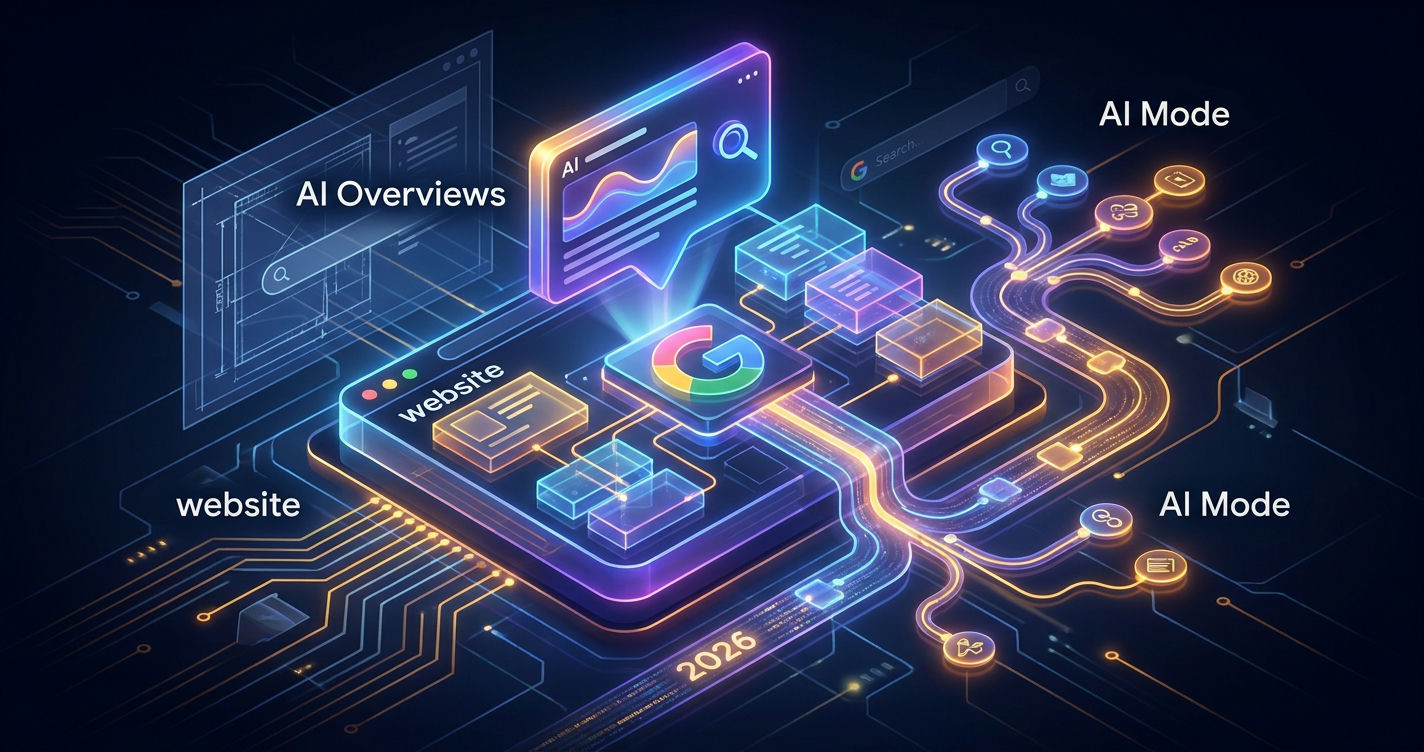
AI Overviews y el AI Mode son los dos formatos de búsqueda generativa de Google. AI Overviews resume respuestas en la parte superior de los resultados de búsqueda clásicos. El AI Mode es una experiencia de búsqueda dialógica que investiga respuestas en varios pasos y enlaza fuentes.
Con la oficial AI Optimization Guide, Google ha explicado por primera vez de forma coherente qué deben hacer los propietarios de sitios para que sus contenidos aparezcan en estos formatos. Este artículo resume las declaraciones centrales y las pone en contexto.
1. El SEO clásico sigue siendo el fundamento
Google es inequívoco en este punto: quien quiera ser citado en AI Overviews o en el AI Mode, primero debe ser indexable y rastreable de forma clásica. No existe un "índice de IA" separado. Las respuestas generativas recurren al mismo índice que la búsqueda web normal.
En concreto, esto significa:
- La página debe ser accesible para el Googlebot (sin Disallow accidental en el robots.txt, sin errores 4xx/5xx, sin Noindex).
- Los contenidos deben estar en el HTML renderizado, no solo en JavaScript que se carga tras una interacción del usuario.
- Los Core Web Vitals, la usabilidad móvil y HTTPS siguen siendo requisitos de clasificación.
Quien tenga carencias aquí, tampoco aparecerá en las respuestas generativas.
2. Snippet-Eligibility: Qué hace que los contenidos sean citables
AI Overviews construye sus respuestas a partir de fragmentos de texto que Google extrae de páginas indexadas. Para que una página sea elegible como fuente, se aplican las mismas reglas que para los Featured Snippets:
- Estructura clara de pregunta-respuesta: Encabezados que reflejen preguntas reales y párrafos que respondan a esas preguntas en pocas frases.
- Declaraciones independientes: Las frases deben entenderse por sí solas. Evite formulaciones como "como se describió anteriormente" o "ver sección 3".
- Datos concretos, cifras, definiciones: Los sistemas generativos prefieren afirmaciones precisas frente al lenguaje de marketing.
- Actualidad: Se prefieren los contenidos fechados con indicaciones claras de actualización.
Google sigue utilizando las directivas data-nosnippet, max-snippet y nosnippet para la selección de fuentes. Quien las configure, se excluye activamente.
3. Lo que Google niega explícitamente
En la sección de preguntas y respuestas, Google desmiente algunos mitos que persistían en la comunidad SEO:
- No existe un "esquema GEO" propio ni un lenguaje de marcado específico para LLM. Quien ofrezca un supuesto esquema
AIContentoLLMReady, está vendiendo humo. llms.txtno es evaluado. Google ignora el archivo. No perjudica, pero tampoco ayuda.- El Keyword-Stuffing para IA no funciona. Frases como "Esta página está optimizada para ChatGPT, Gemini y Perplexity" se consideran señales de spam.
- Los datos estructurados no sustituyen al contenido. El marcado de Schema.org ayuda a la comprensión, pero solo si el contenido marcado también aparece en el texto visible.
4. Control de los rastreadores de IA
Google distingue claramente entre el Googlebot clásico y los rastreadores para datos de entrenamiento de IA:
- Googlebot sigue siendo responsable de la búsqueda y de AI Overviews. Quien lo bloquee, desaparece de ambos.
- Google-Extended es el User-Agent independiente para el entrenamiento de Gemini y Vertex AI Grounding. Los operadores pueden excluirlo mediante el robots.txt sin perder visibilidad en la búsqueda.
Ejemplo para robots.txt:
User-agent: Google-Extended
Disallow: /
Importante: Esta decisión debe tomarse de forma consciente. Quien bloquee Google-Extended aparecerá de forma menos fiable como fuente citable en las respuestas de Gemini.
5. Agentic Web y datos estructurados
Con el AI Mode, el llamado Agentic Web cobra protagonismo: asistentes de IA que reservan citas, comparan productos o realizan pedidos en nombre de los usuarios. Para que las máquinas puedan ejecutar acciones de forma fiable, necesitan datos estructurados inequívocos según las directrices de Google.
Google recomienda especialmente para 2026:
- Product con información completa de Offer, Price y Availability.
- LocalBusiness con horarios de apertura, dirección y número de teléfono.
- Organization con referencias
sameAsa perfiles oficiales. - Event, Recipe, FAQPage y HowTo donde el contenido sea pertinente.
Lo decisivo es la coherencia entre el marcado etiquetado y el contenido visible de la página. Las discrepancias se consideran manipuladoras.
6. Contenido duplicado y canonicalización
Las respuestas generativas acortan contenidos y combinan fuentes. Esto intensifica un viejo problema: si el mismo contenido es accesible bajo varias URL, Google fragmenta las señales y ninguna variante será elegida como fuente preferida.
Obligatorio para 2026:
- Una etiqueta Canonical autorreferencial en cada página indexable.
- Redireccionamientos consistentes de las variantes (http/https, www/non-www, barra final) a la forma canónica.
- Etiquetado
hreflangen ofertas multilingües, para que AI Overviews cite la versión de idioma correcta.
7. Contenidos generados por IA
Google reafirma su posición: no importa cómo se haya creado un contenido, sino si es útil, original y confiable. Los textos creados con IA están permitidos, siempre que sean revisados editorialmente, sean factualmente correctos y estén orientados a un público objetivo reconocible.
Lo que se penaliza son las páginas generadas masivamente sin valor añadido evidente, escritas exclusivamente para los motores de búsqueda. Esto no es una novedad, sino parte de las directrices de spam existentes.
8. Qué hacer ahora
Quien quiera ser citado en AI Overviews y en el AI Mode en 2026 debe proceder en este orden:
- Verificar la rastreabilidad e indexabilidad técnica.
- Estructurar los contenidos como respuestas claras e independientes.
- Desplegar de forma consistente datos estructurados para productos, organizaciones y ubicaciones.
- Limpiar etiquetas Canonical y redireccionamientos.
- Tomar una decisión consciente respecto a Google-Extended.
Precisamente estos requisitos —rastreabilidad, aptitud para Snippets, datos estructurados consistentes, Canonicals limpios y una decisión consciente sobre Google-Extended— son los que nuestra AI Trust Audit analiza a diario y siguiendo el procedimiento esbozado en la AI Optimization Guide. Comience ahora un análisis de su dominio: