O que os AI-Crawlers veem – e o que não veem
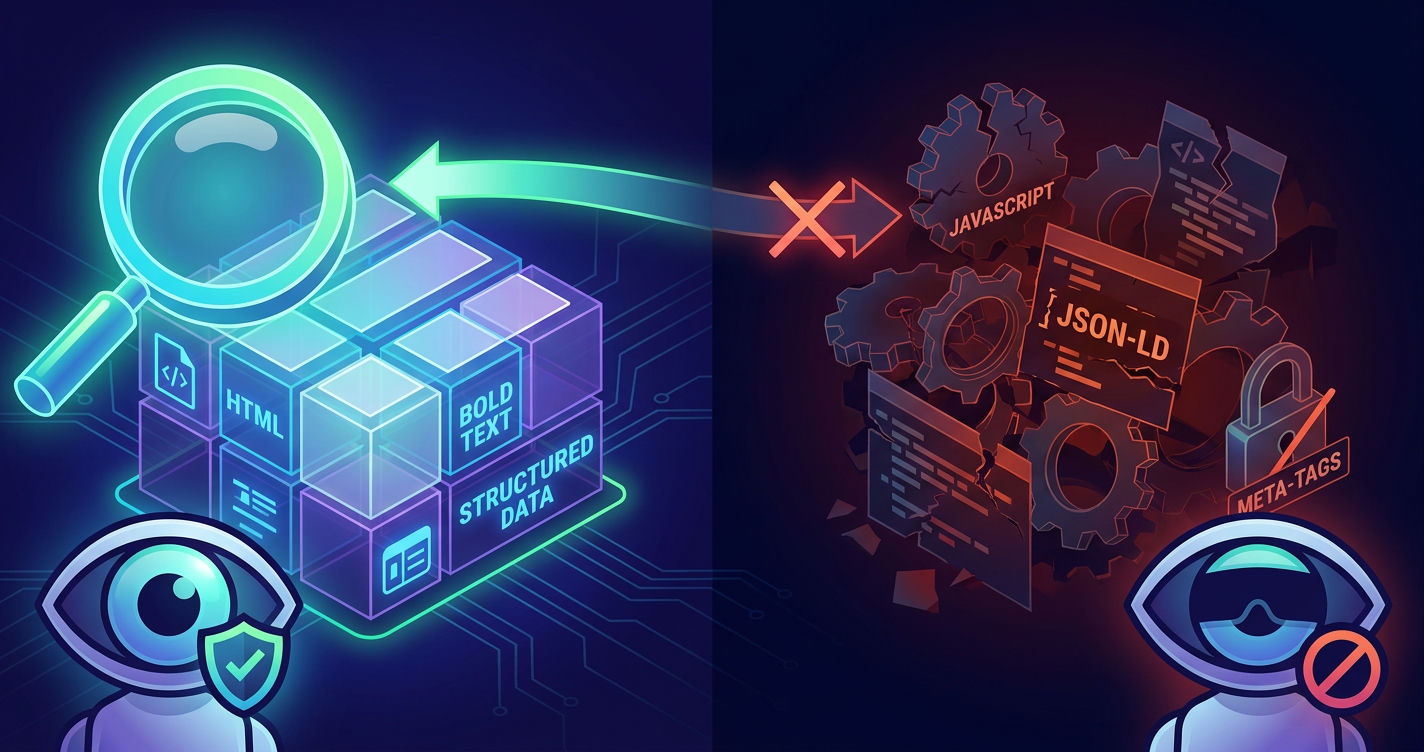
Muita coisa que é considerada óbvia no dia a dia do SEO é invisível para os LLMs no modo de conversação. O novo estudo Writesonic 2026 analisou seis grandes crawlers de LLM (ChatGPT, Claude, Gemini-Conversation, Perplexity, Bing Copilot, Google AI Overviews) e confirmou: todo o conteúdo deve ser entregue de forma que permaneça compreensível sem JavaScript, sem muito scroll e sem metadados no head.
Os três níveis de crawler (HTML-only / Headless / Full-Browser)
Para fins de classificação, ajuda usar uma grade simples, na qual os crawlers de LLM atuais geralmente se enquadram nos níveis 1 e 2:
- Nível 1: HTML-only Parser – leem HTML estático, seguem links de forma limitada, não executam JavaScript e não fazem scroll.
- Nível 2: Headless Light – conseguem analisar o HTML de forma mais robusta, considerando fallbacks individuais (ex: <noscript>), mas sem renderização real ou scroll.
- Nível 3: Full-Browser – executam JavaScript, realizam renderização complexa e fazem scroll. No entanto, o estudo mostra a predominância de comportamentos dos níveis 1 e 2.
O que todos os 6 LLMs veem de forma confiável — e o que não veem
Os testes da Writesonic revelam padrões claros:
- 3 de 6 LLMs não executam JavaScript. Conteúdos JS-only (SPAs, avaliações injetadas no lado do cliente, conteúdos em lazy-load) permanecem invisíveis.
- 0 de 6 LLMs leem JSON-LD no modo de conversação ao vivo. Importante: o JSON-LD continua sendo relevante para o índice de pesquisa do Google – dois mundos distintos.
- 0 de 6 LLMs leem Meta-Description ou OG-Tags no modo de conversação.
- 5 de 6 LLMs leem a tag <title> de forma confiável. Por isso, ela é o elemento de head mais importante para a leitura dos LLMs.
- 0 de 6 LLMs fazem scroll. Conteúdos „below the fold“ (abaixo da dobra) e imagens/blocos de texto carregados via lazy-load são ignorados.
- 4 de 6 LLMs leem fallbacks <noscript>.
- Conteúdo oculto via CSS (ex: display:none, acordiões) é visível; pseudoconteúdos ::before/::after são invisíveis.
- Microdados no body são lidos melhor do que JSON-LD no head.
Tag Title é o novo ouro — recomendação prática
Se 5 de 6 crawlers leem o Title de forma confiável, ele se torna a alavanca central. Recomendações:
- Preciso, denso em informações, com menos de 60 caracteres; evite frases vazias.
- Sugestão de estrutura: Tema primário | benefício concreto | marca.
- Varie de acordo com o tipo de página (categoria, produto, guia), mas mantenha a terminologia consistente.
- Posicione os termos mais fortes primeiro; nome da marca ao final, a menos que haja uma busca forte pela marca.
- Sincronize H1 e Title semanticamente, sem cópia cega: o Title condensa, a H1 explica.
JSON-LD não está morto, mas Microdata ganha na leitura de LLMs
O estudo mostra: no modo de conversação, o JSON-LD não é lido, enquanto os Microdata no body tendem a ser. Recomendação de ação:
- Mantenha o JSON-LD para o índice de pesquisa (produtos, FAQs, organização, breadcrumbs).
- Espelhe fatos críticos adicionalmente como Microdata diretamente no body visível (preços, disponibilidade, avaliações), com conteúdo idêntico ao JSON-LD.
- Evite contradições entre dados estruturados e texto visível.
- Utilize elementos HTML semânticos (article, header, nav, main, footer) para estruturar de forma limpa o conteúdo do body para os parsers.
Lazy Loading & Below-the-fold — os assassinos subestimados
Como 0 de 6 LLMs fazem scroll, os mecanismos de lazy-load isolam conteúdos centrais da percepção. Consequências:
- Posicione a mensagem principal, USPs do produto, preços e chamadas para ação primárias acima da primeira altura do viewport.
- Carregue imagens/conteúdos de texto relevantes para o topo sem lazy-load (ou com fallback inline no lado do servidor). Não utilize injeção puramente no lado do cliente para conteúdos principais.
- Ofereça fallbacks <noscript> para ativos críticos (ex: imagens estáticas de produtos, trechos de texto).
- Verifique SPAs e widgets de avaliação: sem renderização no lado do servidor, eles permanecem invisíveis.
O que nossa auditoria faz com isso
Expandimos as auditorias técnicas com quatro verificações específicas e ajustamos os pesos moderadamente:
- title_tag_present: Verifica a existência, comprimento e precisão da tag Title por URL.
- lazy_loaded_main_content: Aviso quando conteúdos essenciais são carregados exclusivamente via lazy-load ou tornam-se visíveis apenas após interação.
- noscript_fallback_present: Registra se existe um fallback <noscript> para módulos de imagem/texto críticos.
- css_generated_critical_content: Reporta risco se copy relevante é gerada via pseudo-elementos CSS (::before/::after). O peso de sinais on-page individuais é deslocado moderadamente em favor do HTML above-the-fold e da qualidade do markup semântico.
Conclusão & 5 medidas concretas para lojistas
O estudo separa os sinais clássicos de SEO daquilo que os LLMs realmente captam no modo de diálogo. Aposte em conteúdos robustos, entregues primeiro em HTML, e proteja informações críticas contra limitações de renderização. Cinco medidas prioritárias:
- Refinar o programa de Titles: Cada página de categoria e cada produto recebe um Title preciso, curto e orientado a benefícios.
- Fortalecer o Above-the-fold: USP, preço, disponibilidade, CTA primária e um parágrafo descritivo diretamente no HTML renderizado pelo servidor.
- Progressive Enhancement em vez de JS-only: Operar SPAs e widgets com SSR/ISR ou fallbacks estáticos; não injetar copy crítica via JavaScript.
- Duplicar dados estruturados: Manter JSON-LD, mas marcar informações-chave adicionalmente como Microdata no body.
- Check de fallback e CSS: Fallbacks <noscript> para módulos centrais; não exibir textos vitais ao negócio em ::before/::after.
Os resultados da Writesonic fornecem diretrizes claras: o que não está no HTML inicial e acima da dobra, efetivamente não existe para muitos LLMs. Ajuste seus templates de acordo e valide regularmente com verificações reais de crawlers.